根据餐厅经营产品及空间特点提供专业款式挑选及颜色搭配
查看更多+

餐饮老板采购桌椅时,最容易犯的错误是"看别人家怎么配就跟着配"。隔壁火锅店用了厚重的实木桌椅,自己也跟着上,结果发现店里翻台慢、服务员搬起来费劲、桌面还被烫出一圈白印。问题不在桌椅质量,在于这套桌椅配的是火锅店的生意,不是你的生意。
The most common mistake that restaurant owners make when purchasing tables and chairs is to "match them according to how others match them". The neighboring hotpot restaurant used thick solid wood tables and chairs, and I followed suit myself. However, I found that the tables in the restaurant were slow to flip, the waiters had difficulty moving them, and the tabletop was even burned with a white mark. The problem is not with the quality of the tables and chairs, it's that this set of tables and chairs is for the business of a hot pot restaurant, not yours.
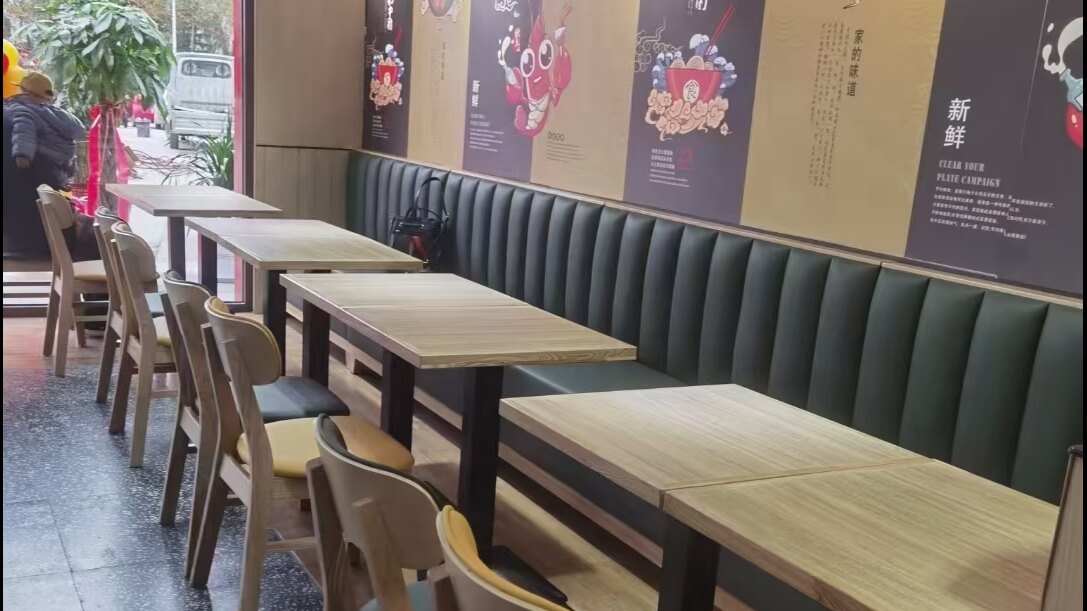
先看客群停留时长,再决定椅子的"赶客"程度。
First, observe the duration of the customer group's stay, and then determine the degree of "customer chasing" of the chair.
快餐、小吃、面馆这类业态,利润靠翻台率撑着。椅子座深偏浅、靠背偏直、坐垫偏硬,顾客吃完自然想起来走人。这不是抠门,是商业模式决定的——一张桌子一天翻五次和翻三次,营业额差出一大截。所以快餐店的桌椅通常是钢木结构或塑料一体成型,轻便、好搬、擦一下就干净,油渍汤渍不渗进去。椅多多旗下鸣鹤家服务过喜家德、包子客这类连锁快餐品牌,配置逻辑就是围绕高频翻台来做的。
Fast food, snacks, noodle shops and other businesses rely on turnover rates to sustain their profits. The chair seat is too deep and too shallow, the backrest is too straight, and the seat cushion is too hard. Customers naturally remember to leave after eating. This is not stingy, it is determined by the business model - flipping a table five or three times a day results in a significant difference in revenue. So the tables and chairs in fast food restaurants are usually made of steel, wood, or plastic integrated molding, which is lightweight, easy to move, and can be cleaned with just a wipe, without oil or soup stains seeping in. Minghejia, a subsidiary of Yiduoduo, has served chain fast food brands such as Xijiade and Baobaoke, with its configuration logic centered around high-frequency turntables.
正餐、宴请、火锅这类业态,客单价高、用餐时间长,椅子要让人坐得住。座深够、靠背能撑腰、坐垫有回弹,顾客坐得舒服才会加菜、点甜品、下次还来。这时候翻台率不是首要指标,客单价和复购率才是。
Businesses such as meals, banquets, and hotpot have high customer prices, long dining times, and chairs that are comfortable to sit on. Only when the seat is deep enough, the backrest can support the waist, and the cushion has rebound, will customers add dishes, order desserts, and come back next time if they feel comfortable sitting. At this point, the turnover rate is not the primary indicator, the average customer price and repurchase rate are the ones.
桌面材质和餐厅品类直接挂钩。
The desktop material is directly linked to the restaurant category.
火锅店、烧烤店要优先考虑耐高温和易清洁,桌面被热锅烫出印子、被油渍渗进纹理,再怎么擦都显旧。石英石、岩板这类材质在这类场景下表现更稳。中餐厅和西餐厅更看重质感和氛围,实木桌面触感好但养护成本高,需要定期上蜡、避免阳光直射和湿度剧变。快餐店用防火板桌面,耐磨防刮、易擦洗,性价比最高。
Hot pot restaurants and barbecue restaurants should prioritize high temperature resistance and easy cleaning. The tabletop may have imprints from the hot pot or oil stains seeping into the texture, making it look old no matter how much it is wiped. Materials such as quartz and rock slabs perform more stably in such scenarios. Chinese and Western restaurants value quality and atmosphere more. Solid wood tabletops have a good touch but high maintenance costs, requiring regular waxing, avoiding direct sunlight and humidity fluctuations. Fast food restaurants use fireproof board tabletops, which are wear-resistant, scratch resistant, easy to clean, and have the highest cost-effectiveness.
尺寸差几厘米,服务员每天多走几公里。
The size difference is a few centimeters, and the waiter walks several kilometers more every day.
桌子和椅子之间的落差不对,顾客坐着不舒服;桌子与桌子之间的通道太窄,服务员上菜端盘要侧身挤过去,一天下来多走的步数和磕碰的概率都上升。桌椅间距的规划,要按餐厅的实际动线来算——客人入座、服务员上菜、收台撤盘,三条动线不能打架。这个环节在采购前用图纸推演一遍,比桌椅买回来再调整省事得多。
The gap between the table and the chair is not correct, making it uncomfortable for the customer to sit; The passage between tables is too narrow, and the waiter has to squeeze sideways to serve dishes, which increases the number of extra steps taken and the probability of collisions at the end of the day. The planning of the distance between tables and chairs should be based on the actual flow of the restaurant - guests taking their seats, servers serving dishes, and tables and plates being removed. The three flow lines should not be in conflict. This step can be deduced with drawings before procurement, which is much more convenient than adjusting tables and chairs after buying them.
定制的价值不在款式多,在匹配度。
The value of customization lies not in the variety of styles, but in the degree of matching.
连锁餐饮品牌找厂家定制桌椅,核心诉求往往不是"好看",而是"统一"——同一品牌在不同城市、不同面积的店里,桌椅的尺寸、颜色、材质保持一致,顾客走进任何一家店都有熟悉感。同时,定制可以根据门店的实际空间做调整,异形角落、柱位旁边、靠窗位置,用非标尺寸的桌椅把空间利用率提上去。鸣鹤家每年为近200家连锁客户服务1000+门店,做的就是这类匹配工作。
Chain catering brands often look for manufacturers to customize tables and chairs, and their core demand is often not "good-looking", but "unified" - the same brand maintains consistent sizes, colors, and materials of tables and chairs in stores of different cities and sizes, so that customers feel familiar when they enter any store. At the same time, customization can be adjusted according to the actual space of the store, such as irregular corners, column positions, and window positions, using non-standard sized tables and chairs to improve space utilization. Minghe Home serves nearly 200 chain customers and 1000+stores annually, doing this type of matching work.
餐饮桌椅的选型逻辑,说到底一句话:先想清楚你是靠翻台率赚钱还是靠客单价赚钱,再决定椅子是让人坐得住还是坐不住。 然后按品类选桌面材质,按动线定桌椅间距,按品牌需求决定是否定制。这几步想明白了,材质、尺寸、款式都是顺带的事。
The selection logic of dining tables and chairs ultimately boils down to one sentence: first, think carefully about whether you make money by turnover rate or by average customer price, and then decide whether the chair is suitable for sitting or not. Then select desktop materials by category, press the line to determine the distance between tables and chairs, and decide whether to customize according to brand requirements. After understanding these steps, material, size, and style are all incidental matters.


