根据餐厅经营产品及空间特点提供专业款式挑选及颜色搭配
查看更多+

餐饮桌椅是餐饮店的核心基础设施,涵盖快餐桌椅、饭店桌椅、餐厅桌椅等多种类型,统称餐饮家具。桌椅的品质、款式、材质不仅决定门店整体装修风格,更直接影响顾客用餐体验、门店翻台效率与后期运维成本。很多餐饮经营者在选购时容易盲目跟风,忽略场景适配性,导致桌椅易损坏、占用空间、顾客体验差等问题。本文将从场景分类、材质选择、选购细节三个维度,分享专业实用的餐饮桌椅挑选技巧。
Dining tables and chairs are the core infrastructure of restaurants, encompassing various types such as fast-food tables and chairs, hotel dining tables and chairs, and restaurant tables and chairs, collectively referred to as dining furniture. The quality, style, and material of tables and chairs not only determine the overall decor of the establishment but also directly impact customer dining experiences, table turnover efficiency, and long-term maintenance costs. Many restaurant operators tend to follow trends blindly when making purchases, neglecting scenario suitability, which leads to issues like frequent damage, space wastage, and poor customer experiences. This article will share professional and practical tips for selecting dining tables and chairs from three dimensions: scenario classification, material selection, and purchasing details.
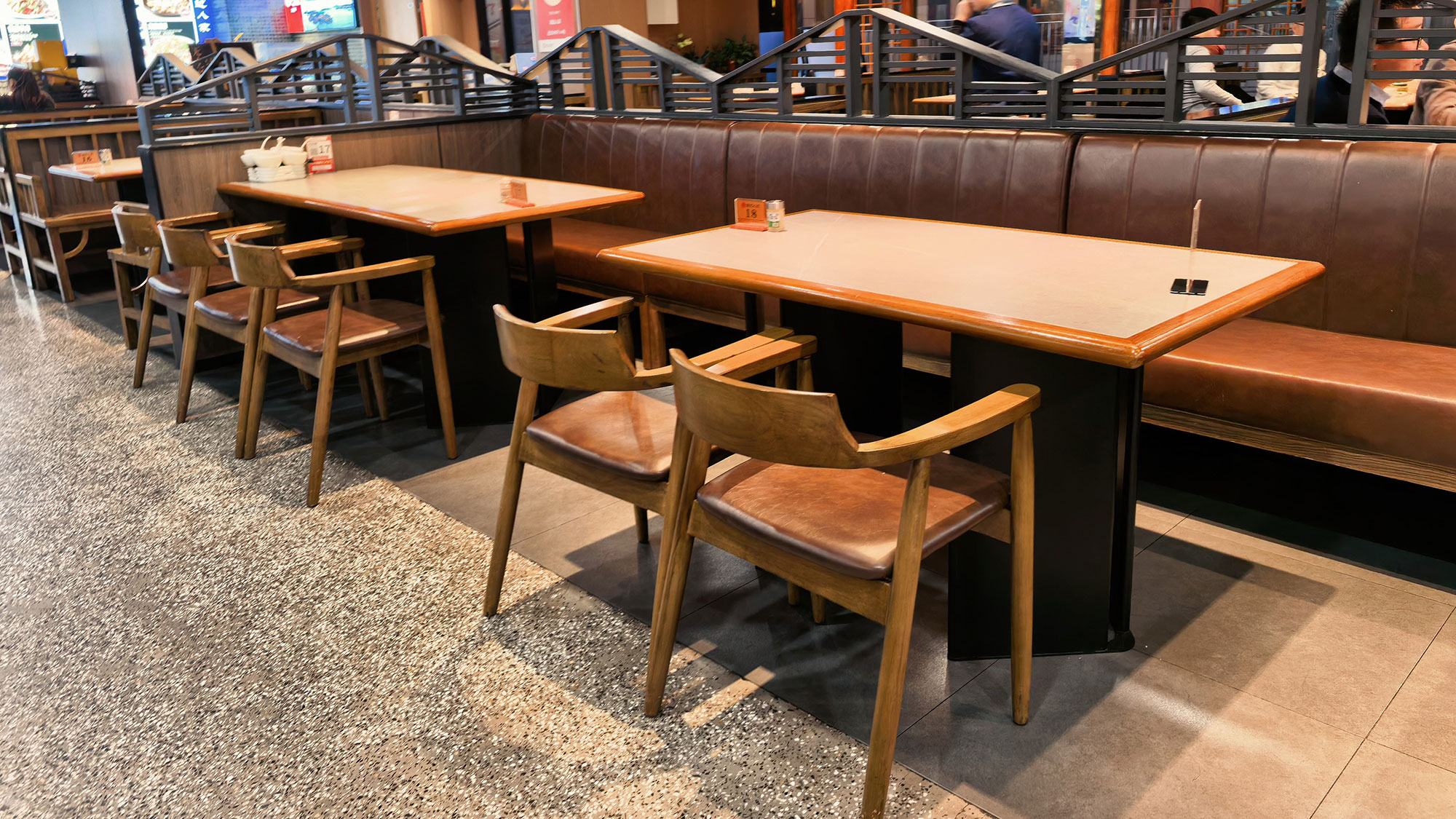
不同经营场景,对餐饮家具的需求截然不同,精准匹配场景是选购的核心前提。快餐桌椅主打高效实用、易清洁、占地小,适配奶茶店、小吃店、快餐门店等高频翻台场景,款式以简约方桌、连体桌椅、轻便单椅为主,结构简单、摆放灵活,可根据客流灵活拼组摆放。饭店桌椅更注重实用性与适配性,适配家常菜馆、中小型饭店,兼顾多人聚餐与单人用餐需求,尺寸适中、承重性强,适配大众消费场景。高端餐厅桌椅则侧重颜值与舒适度,造型精致、线条简约,搭配软包座椅,兼顾氛围感与用餐体验,适配正餐餐厅、特色主题餐厅。
In different business scenarios, the demand for dining furniture varies significantly. Precise matching of scenarios is the core prerequisite for selection. Fast-food tables and chairs emphasize efficiency, practicality, ease of cleaning, and compact space usage, making them suitable for high-frequency turnover scenarios such as milk tea shops, snack bars, and fast-food restaurants. The styles primarily include simple square tables, integrated tables and chairs, and lightweight single chairs, featuring simple structures and flexible placement, allowing for adaptable grouping arrangements based on customer flow. Restaurant tables and chairs prioritize practicality and adaptability, catering to home-style restaurants and small to medium-sized eateries, while balancing needs for both group dining and individual meals. They feature moderate sizes and strong load-bearing capacity, fitting well into mass-consumer dining scenarios. High-end restaurant tables and chairs focus on aesthetics and comfort, with refined designs, minimalist lines, and upholstered seating, combining ambiance with dining experience, making them suitable for formal dining restaurants and themed specialty eateries.
材质是决定餐饮桌椅耐用性与性价比的关键。快餐、小吃门店优先选择防火板、不锈钢、岩板材质,防水防油、耐刮耐磨,日常擦拭即可清洁,抗磕碰能力强,适配高频使用场景。饭店常用多层实木、加厚板材桌椅,稳定性强、承重好,性价比出众,适配日常高频待客。高端餐厅可选用实木、优质岩板材质,质感高级、颜值出众,搭配高密度海绵软包座椅,久坐不塌陷,提升门店档次。需要避开劣质薄板材、低密度板材,这类材质易开裂、掉漆、变形,使用寿命极短。
The material is the key factor determining the durability and cost-effectiveness of dining tables and chairs. Fast food and snack outlets prioritize fireproof board, stainless steel, and rock slab materials, which are waterproof, oil-resistant, scratch-resistant, and wear-resistant. They can be cleaned with daily wiping, exhibit strong impact resistance, and are suitable for high-frequency usage scenarios. Restaurants commonly use multi-layer solid wood and thickened board tables and chairs, which offer strong stability, excellent load-bearing capacity, and outstanding cost-effectiveness, making them ideal for daily high-frequency customer service. High-end restaurants may opt for solid wood or premium rock slab materials, featuring a premium texture and exceptional aesthetics, paired with high-density sponge soft upholstery for seats that remain firm even after prolonged sitting, thereby elevating the restaurant's ambiance. It is essential to avoid low-quality thin panels and low-density boards, as these materials are prone to cracking, peeling, warping, and have extremely short lifespans.
最后关注结构与尺寸细节,兼顾实用与安全。优质餐饮桌椅桌腿多采用方形承重架、十字支撑结构,稳固不摇晃,受力均匀不易倾倒。行业通用餐桌高度为75-77cm,符合人体工学,桌椅落差保持30cm左右,顾客用餐无压抑、不挡腿。同时建议根据门店面积选配款式,小店优先简约轻便款,节省空间;大店面可选用规整成套桌椅,提升整体整洁度与高级感。
Finally, focus on the structure and dimensional details, balancing practicality and safety. High-quality dining tables and chairs often feature square load-bearing frames and cross-bracing structures, ensuring stability without wobbling and even weight distribution to prevent tipping. The industry-standard table height ranges from 75-77cm, adhering to ergonomic principles, with a chair-to-table height difference of approximately 30cm to avoid a cramped dining experience and leg obstruction. Additionally, it is recommended to select styles based on store size: opt for minimalist and lightweight designs in small spaces to save room, while larger venues can utilize uniform, matching table sets to enhance overall neatness and sophistication.
总而言之,餐饮家具选购无需一味追求高端,贴合门店业态、耐用易打理、适配空间布局,才是最优选择,既能控制运营成本,又能持续提升顾客用餐体验。
In summary, when selecting dining furniture, there is no need to blindly pursue high-end options. The optimal choice should align with the store's business model, be durable and easy to maintain, and fit the spatial layout—this approach not only helps control operational costs but also consistently enhances the customer dining experience.


